Posts

World’s Most Polluted City

Image
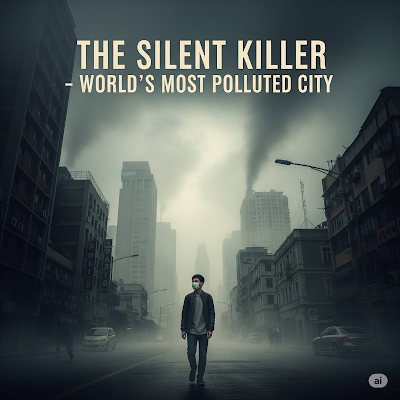
The World Health Organization studied the air quality of 1,600 cities in 91 countries in 2014. Delhi was ranked at number 1 as the most polluted city in the world. Beyond the findings for Delhi, 13 of the 20 cities found to have the highest annual averages of PM2.5 in the WHO study were Indian cities. Using satellite-based remote sensing technology and ground level data from the Central Pollution Control Board, Dr. Michael Greenstone and his team produced an influential study (Greenstone et al, 2015) showing that 660 million people (more than half of India’s population) lived in areas that exceed India’s standards for fine particulate pollution. Large portions of India, in particular in the north along the Indo-Gangetic Plain can been seen to be heavily polluted and in non-compliance with India’s National Air Quality Standards (NAAQS.) Since 2014, this data has been updated by the W.H.O. and though New Delhi got displaced from the top of the list, it wasn’t due to actions taken to c...

Measuring and Tracking Air Quality

Image
Throughout the world air quality continues to deteriorate due to increasing emissions, threatening human health and life, and contributing to climate change, biodiversity loss, pollution and waste. According to the World Health Organization, 99% of the global population breathes impure air. Even though air pollution is a global problem, it disproportionately affects those living in developing nations and particularly the most vulnerable, such as women, children and the elderly. PM2.5, which refers to particulate matter with a diameter equal to or less than 2.5 micrometres, poses the greatest health threat and is often used as a metric in legal air quality standards. When inhaled, PM2.5 is absorbed deep into the bloodstream. The deadliest illnesses linked to PM2.5 air pollution are stroke, heart disease, lung disease, lower respiratory diseases (such as pneumonia), and cancer. High levels of fine particles also contribute to other illnesses, like diabetes. Children are particularly vul...

Air Pollution and the Rising Instance of Diseases among Human Beings

Image
Poor air quality has a direct effect on human health. Exposure to air pollutants or airborne allergens can harm our respiratory and cardiovascular systems or exacerbate existing conditions in susceptible populations. Children, older adults, persons with asthma, and immunocompromised persons are most vulnerable to air quality impacts. Respiratory impacts can include advanced stage asthma, respiratory allergies, and airway diseases, while cardiovascular impacts can include hypertension, coronary artery disease, heart attack, and stroke. Bad air quality is also being linked to instances of eye problems up to and including partial blindness, skin allergies, lack of mental alertness and kidney problems due to inhalation of chemical particles that are bad for kidney health. The national library of medicine at the National Centre for Biotechnology Information in the United States has published a detailed report on each particulate element in polluted air and its effect on people. The same rep...

Recipe for Disaster – What Ails the Air Quality and Ways to Gauge It

Image
In our previous blogs we have discussed what constitutes air pollution, its quantified statistics and the governmental regulations and measures to tackle the problem. However, no such effort can be successful unless we know the accurate methods to interpret these pollution statistics and pin point the precise reasons or things that cause such pollution. This blog thus attempts to uncover some of the components that together form a recipe for disaster related with the health and safety of people. Each comes with its set of causes, and each requires are attention and effort to prevent or minimize it. Air pollution is caused by solid and liquid particles called aerosols, suspended gases, and chemical reactions that make them worse pollutants than in their original form. Most air pollution comes from energy use and production. Certain gases in the atmosphere can also cause air pollution. In addition, EPA (United States Environmental Agency) has identified six pollutants as “criteria” air...

Air Pollution and Climate Change

Image
Air pollution and climate change are closely interlinked. The main sources of global warming—the extraction and burning of fossil fuels—are not only key drivers of climate change, but are also major sources of air pollutants. Many air pollutants that are harmful to human health and ecosystems also contribute to climate change by affecting the amount of incoming sunlight that is reflected or absorbed by the atmosphere. Climate change mitigation actions can help to reduce air pollution, and clean air measures can help to reduce greenhouse gas emissions, leading to reductions in global warming. Air pollutants include more than just greenhouse gases, principally carbon dioxide but also methane, nitrous oxide and others. These often interact with each other and are often referred to as climate forcers. Ozone in the atmosphere warms the climate, while different components of particulate matter can have either warming or cooling effects on the climate. Black carbon, a particulate pollutant ...

Recipe for Disaster

Image
The term “air pollutant” means any air pollution agent or combination of such agents, including any physical, chemical, biological, radioactive (including source material, special nuclear material, and byproduct material) substance or matter which is emitted into or otherwise enters the ambient air. Air pollution is contamination of the indoor or outdoor environment by any chemical, physical or biological agent that modifies the natural characteristics of the atmosphere. Air pollution is caused by solid and liquid particles and certain gases that are suspended in the air. These particles and gases can come from car and truck exhaust, factories, dust, pollen, mold spores, volcanoes and wildfires. The solid and liquid particles suspended in our air are called aerosols. Any particle that gets picked up into the air or is formed from chemical reactions in the air can be an aerosol. Many aerosols enter the atmosphere when we burn fossil fuels—such as coal and petroleum—and wood. These par...

Death by Breathing

Image
It is a known fact that human beings and even animals can last a few weeks or even months without food, a few weeks without water; but only a few minutes at the most without air. Thus the importance of constant air presence for sustaining life is a must. Yet it is not enough to just be surrounded by the all pervasive air. It is also crucial that the air is clean, fresh and pollution free, since inhaling polluted air can lead to diseases of various proportions and gravity. However, in the present world, this natural resource that we cannot live without has become the cause for human deaths, chronic diseases, infant and maternal mortality, and food and water contamination. Air pollution is now one of the leading causes of death in India and Asia. The India specific findings of the new Global Burden of Disease (GBD) count, a global initiative involving the World Health Organisation, stated that air pollution has become the fifth largest killer in India. This India specific findings we...

Popular posts from this blog

The Silent Killer - World’s Most Polluted City

Air Pollution – Introduction

Recipe for Disaster – What Ails the Air Quality and Ways to Gauge It